Product Discovery: Solving the Right Problem Before Building Anything
Every product starts with an idea. It might come from a customer request, an internal observation, a market opportunity, or a team's belief that something could be improved. Organizations rarely struggle with generating ideas; the real challenge is determining which ideas are worth turning into products.
Many companies move directly from idea to execution. They create roadmaps, assign teams, design interfaces, and begin development because building something tangible feels like progress. However, months later, they may discover that although the product works as intended, customers do not find enough value in it to adopt it.
The issue was not the quality of execution. The issue was that the company built a solution before fully understanding the problem. Building the wrong solution efficiently is still failure.
Product discovery exists to prevent this mistake. It is the process of exploring customer needs, validating assumptions, and developing a deeper understanding of the challenges people face before investing significant resources into building a solution. The goal is not simply to create products faster, but to increase the chances of creating products that actually matter.
The Difference Between a Customer Request and a Real Problem
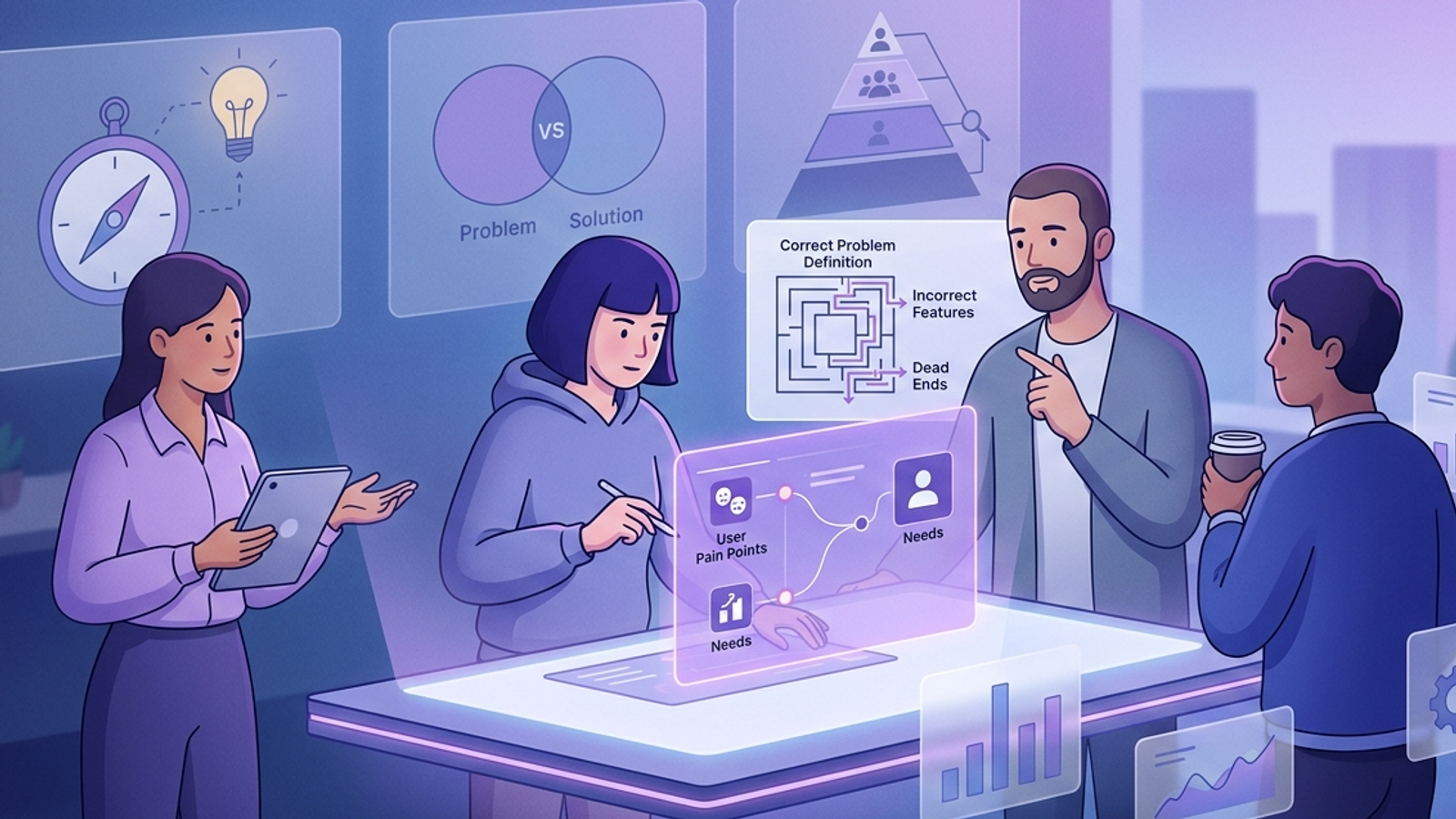
One of the biggest challenges in product development is that customers often describe solutions rather than problems. When someone asks for a specific feature, they are usually explaining what they believe would improve their situation based on their current understanding. However, the requested feature may only represent the visible surface of a much deeper issue.
For example, a manager might request a dashboard that displays team productivity metrics. A development team could immediately begin designing charts, reports, and analytics features. The request seems clear, and the solution appears obvious.
However, product discovery encourages teams to ask a different question: why does the manager need this dashboard in the first place?
The deeper problem might not be a lack of data. It could be that managers struggle to understand project progress, communication between teams is fragmented, or existing information is difficult to access. In that case, building a dashboard may solve the wrong problem. The company would deliver exactly what was requested while failing to address what the customer actually needed.
Great products are not created by blindly following feature requests. They are created by understanding the needs, frustrations, and goals behind those requests.
Why Companies Rush Into Solutions
The pressure to build quickly is understandable. In competitive markets, speed is often considered a major advantage. Companies want to launch new features, respond to competitors, and show visible progress. A completed product or feature feels like evidence that the organization is moving forward.
However, speed without understanding can create expensive mistakes.
A team can spend months building a feature that functions perfectly but provides little real value. Marketing teams may struggle to communicate its benefits because the customer problem is unclear. Sales teams may encounter resistance because the solution does not address a significant pain point. Users may ignore the feature entirely because it solves a problem they do not consider important.
The problem is that organizations often measure progress by output rather than impact. They celebrate the number of features released, tasks completed, or updates shipped, but these measurements do not answer the most important question: did this work improve the customer's experience?
Product discovery shifts the focus from building more things to building the right things.
Product Discovery as a Strategic Capability
Product discovery is sometimes viewed as a research phase that happens before the "real work" begins. In reality, discovery is one of the most strategic activities a product team can perform because it influences every decision that follows.
Every product decision contains assumptions. Companies assume they understand their customers, they assume a problem is significant enough to solve, and they assume their proposed solution will create value. Without validation, these assumptions become expensive guesses.
Discovery helps organizations replace assumptions with evidence. Through customer conversations, behavioral research, market analysis, and experimentation, teams gain a clearer understanding of what people actually need and why existing solutions may not be enough.
This does not mean discovery removes all uncertainty. No product decision comes with complete certainty. Instead, discovery reduces unnecessary risk by ensuring that teams are investing their time and resources in opportunities with real potential.
Understanding Problems Through Customer Research
Effective product discovery begins with curiosity. Instead of immediately asking customers what features they want, strong product teams investigate how people currently work, where they experience friction, and what obstacles repeatedly prevent them from achieving their goals.
This distinction matters because people are not always able to identify the root cause of their problems. They naturally describe what they experience, but the underlying reason may be different from their initial assumption.
For example, employees may say they need better communication tools because they constantly miss updates. However, deeper investigation may reveal that the real issue is not communication itself but unclear responsibilities, scattered information, or poorly designed workflows.
The role of discovery is to look beyond the first explanation and understand the system surrounding the problem. The goal is not to collect more opinions. The goal is to uncover the reality behind user behavior.
The Cost of Skipping Discovery
When companies skip product discovery, the consequences often appear much later in the development process. A product may launch successfully from a technical perspective but fail to achieve meaningful adoption. Teams may continue adding features in an attempt to solve declining engagement, creating more complexity without addressing the original issue.
This creates a cycle where organizations spend more resources trying to fix problems that could have been identified earlier.
Ironically, discovery is often avoided because companies believe it slows them down. They worry that spending weeks researching and validating ideas will delay progress. However, the cost of a few weeks of discovery is usually far smaller than the cost of months spent building something that customers do not need.
The fastest path to success is not always the path with the least planning. Sometimes the fastest path is taking the time to understand where you are going before moving forward.
Building What Users Actually Need
Imagine two companies creating a collaboration platform. Both receive similar feedback from customers: managers want more notifications because they feel they are missing important updates.
The first company immediately builds a more advanced notification system. They add alerts, reminders, and customization options based on the assumption that more information will solve the problem.
The second company investigates further. Through customer interviews and observation, they discover that managers are not actually struggling because they lack notifications. They are struggling because project information is scattered across multiple systems, making it difficult to identify what requires attention.
The first company built the requested solution. The second company solved the actual problem.
This difference is the foundation of product discovery. Understanding the reason behind a request often reveals opportunities that would never appear through feature-based thinking alone.
Better Products Begin With Better Questions
The quality of a product is often determined by the quality of the questions asked before development begins. Teams that focus only on solutions tend to ask questions like, "What feature should we build next?" Teams that practice discovery ask deeper questions: "What problem creates the most value if solved?" and "Why does this problem exist in the first place?"
These questions transform product development from a process of feature creation into a process of problem solving. They encourage teams to look beyond immediate requests and understand the broader context in which customers operate.
The best product teams are not necessarily the ones with the most ideas. They are the ones that can identify which problems are meaningful enough to deserve attention.
Building Less, Understanding More
Innovation is often associated with creating something new, but successful innovation is not about adding more features or increasing complexity. It is about identifying what truly matters and delivering value in the simplest, most effective way possible.
Every feature has a cost beyond development time. It requires maintenance, support, documentation, and user attention. Building unnecessary solutions creates friction for both the company and the customer.
Product discovery helps organizations make deliberate decisions about where to invest their resources. It ensures that every feature, product, or initiative connects back to a genuine customer need.
The objective is not to build faster for the sake of speed. The objective is to build with confidence.
Final Thoughts
The strongest products are not created by starting with technology. They are created by starting with understanding.
Before writing code, designing interfaces, or creating roadmaps, successful companies invest time in discovering the problems that truly matter. They recognize that customers are not looking for more features; they are looking for better ways to overcome meaningful challenges.
Product discovery is not a delay before building. It is the foundation that makes building worthwhile.
Because the most valuable products are not created by solving the problems companies imagine. They are created by solving the problems people actually have.
Continue Exploring Product Thinking
At Hexifyer, we explore the intersection of technology, psychology, and business strategy to help organizations understand how better decisions create better outcomes. From product development to organizational design, we focus on the ideas that help companies build solutions that create lasting value.
Continue exploring Hexifyer's knowledge library to discover practical frameworks for building businesses that aren't just busier but smarter, more intentional, and designed for sustainable growth.