The Startup That Built Everything Right, Except One Thing
In the late 1990s, the internet created a wave of excitement unlike anything the business world had seen before. Entrepreneurs were racing to transform traditional industries through technology, and investors were searching for the next company that could redefine everyday life. In that environment, a startup called Webvan believed it had discovered the future of grocery shopping.
The idea was simple: instead of driving to a supermarket, customers would order groceries online and have them delivered directly to their homes. The company invested heavily in technology, built massive distribution centers, hired talented engineers, and raised hundreds of millions of dollars from investors who believed the future had arrived. But there was one problem: customers did not need it badly enough.
The company had built an impressive solution, but it had not achieved the most important requirement for any startup, which is product-market fit. The market was not rejecting the technology because it was poorly built; the technology worked fine. The problem was that the company had overestimated how much customers valued the solution at that moment.
Meanwhile, another company approached a similar challenge differently. Zappos did not begin by building massive warehouses or investing millions into infrastructure. Instead, the founders tested whether people would actually buy shoes online. They photographed shoes from local stores, posted them online, and only purchased inventory after receiving orders. They started with a simple question: do people actually want this?
That question represents the foundation of product-market fit. Successful startups are not built when founders create something impressive. They are built when they discover something valuable enough that people willingly choose it.
What Is Product-Market Fit?
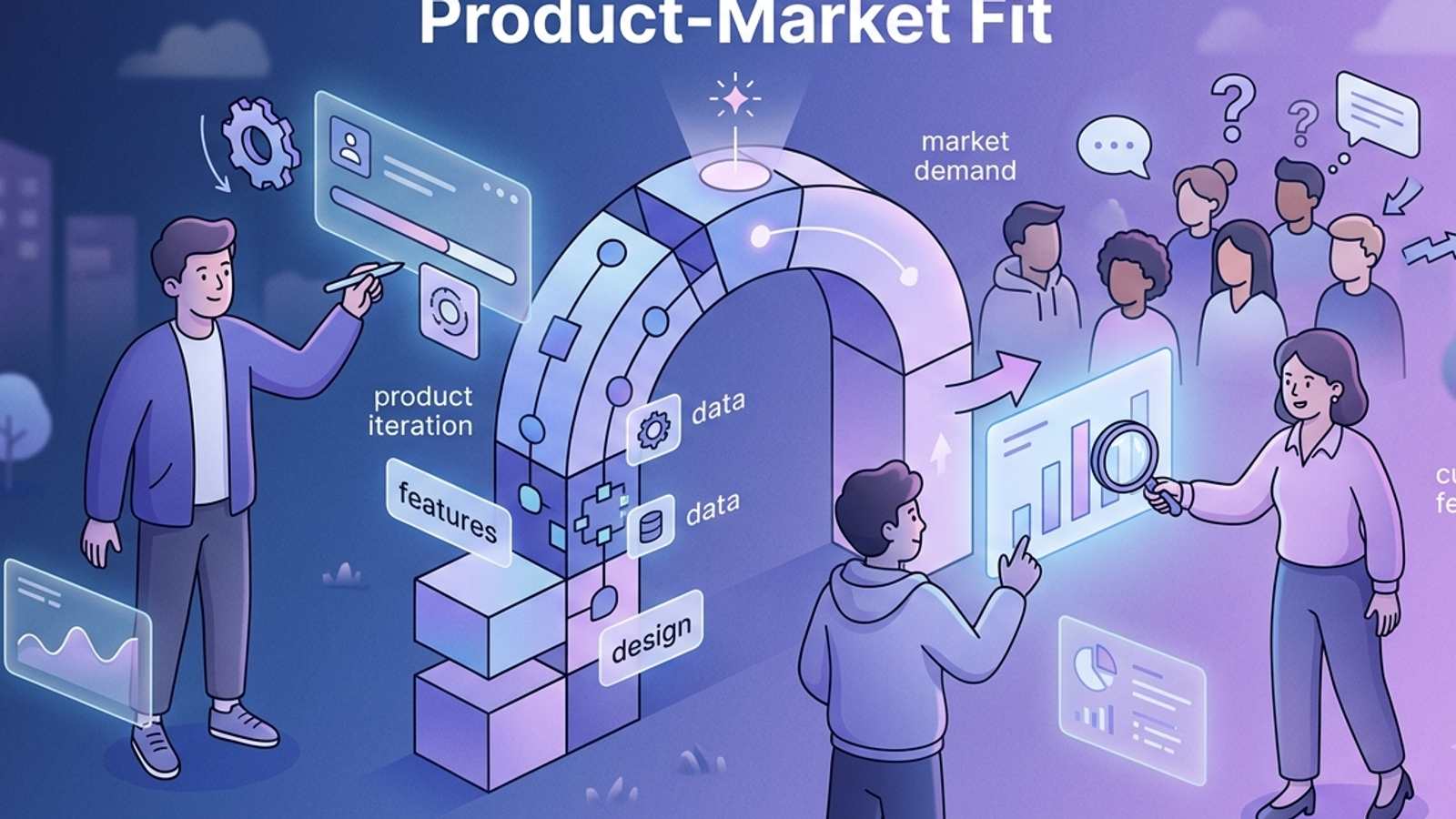
Product-market fit describes the alignment between a product and the market it serves. It happens when a company creates a solution that addresses a meaningful customer problem in a way that people recognize, value, and continue using. At its core, product-market fit answers a simple question: have we built something that people genuinely need?
This sounds obvious, but many startups struggle because they confuse interest with demand. A product can attract attention without creating lasting value. People may download an app because it is interesting, sign up because it is free, or try a service because they are curious, and none of these behaviors necessarily indicate that the product has found its place in the market.
Real product-market fit appears when customers see the product as a meaningful improvement over their current situation, so much so that the product becomes part of their workflow, their habits, or their decision-making process. A useful way to think about it is that a product without market fit requires constant persuasion, while a product with market fit creates its own momentum. When customers actively seek the product, recommend it to others, and feel frustrated when they cannot use it, the company has discovered something valuable.
Why Great Ideas Often Fail Without Product-Market Fit
One of the biggest misconceptions in entrepreneurship is that successful companies begin with revolutionary ideas. While innovation matters, ideas alone rarely determine success. The world is full of excellent products that failed because they arrived in the wrong market, solved a minor inconvenience, or targeted customers who were not ready to change their behavior.
A startup founder often sees the world through the lens of possibility, imagining what could exist and becoming excited about building it. However, customers do not make decisions based on what is possible; they make decisions based on what is valuable to them right now. This creates a gap between the founder's perspective and the customer's perspective. The founder asks, "Can we build this?" while the customer asks, "Why should I care?" Product-market fit exists when these two perspectives finally meet.
The Three Elements Behind Product-Market Fit
Finding product-market fit requires more than having a good product. It requires alignment between three important elements: the problem, the market, and the experience.
Understanding the Real Customer Problem
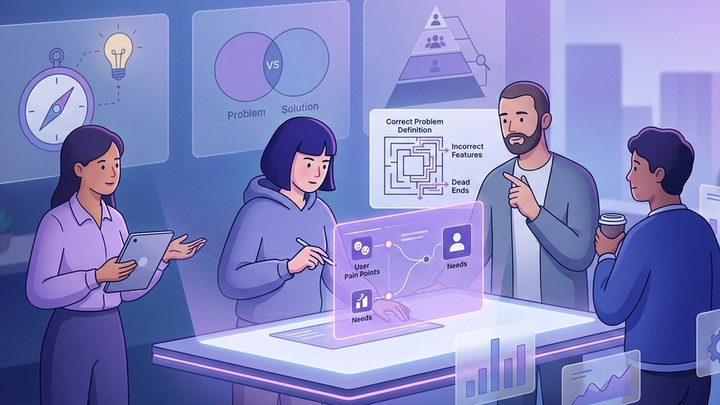
Every successful product begins with a problem, not a feature. Many startups make the mistake of starting with technology. They discover a capability, build a product around it, and then search for people who might want it, an approach that often creates solutions looking for problems.
Companies that achieve product-market fit work differently. They begin by understanding frustrations, inefficiencies, and unmet needs, studying what customers struggle with, what solutions they currently use, and why those solutions are insufficient. The strongest opportunities usually exist where people already experience pain but have accepted it as normal.
A project management tool, for example, is not simply competing with other software products. It is competing with spreadsheets, scattered messages, unnecessary meetings, and the frustration of not knowing what is happening inside a team. The product succeeds when it removes a problem people already feel.
Finding the Right Market Timing
Even when a problem exists, timing determines whether a product succeeds. A company can create an excellent solution and still fail because the market is not ready, since customers may understand the problem but not feel enough urgency to change their behavior.
Many technologies existed long before they became successful because the surrounding environment was not prepared: the necessary infrastructure, customer habits, and economic conditions had not aligned yet. Product-market fit is therefore not only about asking whether people need this, but also whether people need this now. The difference between these two questions has created the success or failure of many companies.
Creating an Experience Customers Prefer
Solving a problem is only the beginning. Customers also judge how easy, enjoyable, and reliable the solution feels. A product competes not only against alternatives but against existing habits, and changing behavior is difficult because people naturally prefer familiar systems, even when those systems are inefficient.
This is why great products focus heavily on user experience. They reduce friction, simplify complicated processes, and make the better choice feel effortless. The best products do not force users to adapt; instead, they adapt to users.
Product-Market Fit Is Not a Destination
Many startups treat product-market fit as a finish line, imagining that once they achieve it, their job becomes scaling and making money. Reality is different. Product-market fit is not something a company permanently owns. It is a relationship between a product and a market, and relationships change.
Customer expectations evolve, new technologies appear, competitors introduce better solutions, and entire industries transform. A company that achieved strong market fit years ago can lose it if it stops listening. This is why successful companies continuously evaluate whether they are still solving the most important problems for their customers. They do not protect their original idea at all costs; they protect their understanding of customer needs. The product may change, the market may change, and the company must change with them.
How Companies Recognize Product-Market Fit
There is no single number that proves a company has achieved product-market fit. Instead, companies look for patterns in customer behavior. One of the strongest indicators is retention: when customers continue using a product after the initial excitement disappears, it suggests that the product provides lasting value.
Another important signal is organic recommendation. When customers naturally tell others about a product, it shows that the value is strong enough to overcome the effort of explaining and recommending it. Growth also changes after product-market fit. Before reaching it, companies often have to push customers toward adoption through heavy marketing and persuasion, but after reaching it, growth begins to pull itself forward because customers understand the value more quickly. The important distinction is that growth before product-market fit is often purchased, while growth after product-market fit is often earned.
The Psychology Behind Why Startups Miss Product-Market Fit
Finding product-market fit is not only a business challenge; it is also a psychological one. Founders invest enormous amounts of time, energy, and identity into their products, and after months or years of work, it becomes emotionally difficult to accept that the market may not respond as expected.
This is connected to a psychological phenomenon known as the sunk cost effect, in which humans tend to value something more when they have invested heavily into it, even when continuing may not be rational. This is why many unsuccessful startups continue improving features that customers never requested.
The best entrepreneurs develop the ability to separate their identity from their ideas. They are willing to change direction because their goal is not proving their original idea was correct; their goal is solving a real problem. They fall in love with the problem, not the solution.
Building Products That Matter
The difference between a startup that survives and one that disappears is rarely effort. Many failed companies had talented teams, strong technology, and ambitious visions. The difference is usually understanding.
Successful companies understand their customers deeply. They recognize that innovation is not about creating something new for the sake of being new; it is about creating something meaningful for people who need it. Product-market fit is the bridge between an idea and its impact. It transforms a product from something a company built into something customers choose, and ultimately, that is the foundation of every successful business.
Build Better Products with Hexifyer
Building a successful product requires more than having a great idea. It requires understanding customers, testing assumptions, and creating systems that turn insights into meaningful solutions.
At Hexifyer, we explore the principles behind successful businesses, technology, and product development, helping teams move beyond simply building products and focus on creating value. Because the best companies are not built around what they want to create. They are built around what people truly need.